 About 16 km south of central Jaipur, beside Jaipur airport, via Tonk Road, Jaipur
Sanganer Jaipur: Block Printing and Handmade Paper Town Guide
Sanganer near Jaipur is the GI-tagged hand block-print and handmade-paper town. Get the crafts, Sanganeri vs Bagru, workshops, how to reach and what to buy.
Quick answer
Sanganer, about 16 km south of central Jaipur, is a historic craft town famous for GI-tagged Sanganeri hand block-printed textiles and eco-friendly handmade paper. It is a working artisan hub, not a monument, best visited on weekdays between 10 AM and 4 PM to see printers and paper-makers at work. This guide is prepared by Delhi Agra Tour Packages, a unit of Experience My India.
- #sanganer
- #jaipur
- #jaipur-attractions
- #jaipur-travel
Right beside Jaipur airport, where centuries-old printing studios, paper mills and medieval Jain temples sit side by side, Sanganer is the source of the delicate floral prints sold across the Pink City. It makes a rewarding craft half-day, and it folds into a trip arranged through Delhi Agra Tour Packages or a wider Golden Triangle tour that leaves room for a workshop or a factory tour.
I am Abhay Sharma, and I have guided travellers around Jaipur and the Golden Triangle since 2015. Sanganer is where I take guests who want to understand the crafts behind the souvenirs, to see a wooden block stamp cloth and a sheet of paper lifted from a pulp vat by hand. This guide gathers everything I tell people before we go, so you visit on the right day, see the crafts actually being made, know a genuine hand print from a copy, and come home with something real.
Sanganer at a Glance
| Detail | Information |
|---|---|
| Location | About 16 km south of central Jaipur, beside Jaipur airport, via Tonk Road |
| Famous for | GI-tagged Sanganeri hand block printing and handmade paper |
| What it is | A working craft town of printing studios, paper mills and Jain temples |
| Best day and time | Weekdays, 10 AM to 4 PM (many units close Sunday / pause at lunch) |
| Workshops | Half-day block-print workshops, 2 to 3 hours, 2,500 to 3,650 rupees |
| From central Jaipur | A 30 to 45-minute drive by cab, auto or local bus |
| Time needed | Half a day |
| Not to be confused with | Sanganeri Gate in the Pink City (named after this town) |
The two tables below hold the details travellers ask for most, gathered at the top so you can plan before reading the full guide.
Visiting
| Item | Detail |
|---|---|
| Best season | October to March |
| Best day and hours | Weekdays, 10 AM to 4 PM (units may close Sunday or pause at lunch) |
| Block-print workshop | 2 to 3 hours, 2,500 to 3,650 rupees per person |
| Sanghi Ji Jain Temple | 5:30 AM to 10 PM daily, free entry |
How to Reach
| From | Distance and time |
|---|---|
| Central Jaipur (M.I. Road / Pink City) | 16 km, a 30 to 45-minute drive via Tonk Road |
| Jaipur International Airport | Right next to the airport, a short hop |
| By local transport | Cab, auto-rickshaw or local bus down Tonk Road |
What Is Sanganer Famous For
Sanganer is famous as one of India's great craft towns, celebrated above all for two living traditions: GI-tagged Sanganeri hand block printing and eco-friendly handmade paper. It is not a tourist monument but a bustling working hub, where printing studios, paper mills and medieval Jain temples stand side by side and the crafts you see in Jaipur's boutiques and markets are actually made.
The town's craft legacy runs back several centuries, flourishing under royal patronage when artisans settled on the banks of the Saraswati, also called the Dravyavati, river. The local river water carried mineral properties ideal for washing, bleaching and bringing out the vibrant natural colours of cotton fabric, which is why the printing trade took root here. That combination of skilled communities and the right water made Sanganer the home of a print style known across the world, and it belongs on any craft-minded list of things to do in Jaipur.
A quick but important clarification: Sanganer the town is not the same as Sanganeri Gate in the Pink City. The gate in Jaipur's walled city is named after this town and its prints, but it is a different place in the city centre; Sanganer itself is the craft town 16 km to the south. For travellers who want to see where Jaipur's textiles come from, a trip out to Sanganer is one of the most rewarding, and it features among the more unusual hidden places in Jaipur for exactly that reason.
Sanganeri Hand Block Printing
Sanganeri hand block printing is the town's signature craft, and it earned a Geographical Indication tag in 2010, a formal mark of its distinct origin and style. The craft is traditionally practised by the Chhipa community, families of printers who have passed the skill down through generations, and it is their work that gives Sanganeri print its worldwide reputation.
What sets the style apart is its delicacy. Artisans use intricately carved teakwood blocks, a rekh block for the outlines and a datta block for filling in colour, to stamp repeating patterns by hand across the cloth. The motifs are fine and floral: butas, single flower motifs, bels, flowing creepers, and geometric trellises, printed in vegetable dyes and azo-free pigments on crisp white or off-white cotton. The result is light, elegant and unmistakable, and seeing a printer line up block after block by eye, keeping the repeat true across metres of cloth, is a lesson in skill you cannot get from a finished scarf.
This is the craft that fills Jaipur's textile shops, so understanding it changes how you shop the city. The fine floral prints you see across the bazaars and boutiques trace back to these studios, and the wider story of the city's crafts and trades is told in our guide to Jaipur gem and jewellery buying, which sits alongside textiles as part of the same artisan economy. The craft grew under the same royal patronage that built the city's great monuments, the court whose seat is the Chandra Mahal and City Palace, and block-printed cloth remains central to Rajasthani dress for the weddings and festivals covered in our guide to Jaipur's festivals on the Golden Triangle. For the air-conditioned, fixed-price end of the market, our guide to Jaipur's shopping malls is a counterpoint, but Sanganer is where the real craft lives.
Sanganeri vs Bagru Prints: The Difference
A question that comes up constantly is the difference between Sanganeri and Bagru prints, the two famous block-print styles of the villages near Jaipur, and the distinction is worth knowing before you buy. Sanganeri prints are known for fine, delicate floral motifs printed on crisp white or off-white backgrounds, light and elegant. Bagru, the neighbouring village, is known for the opposite: darker grounds, natural indigo and black, and the mud-resist technique called dabu that gives its cloth a bolder, earthier look.
In short, Sanganeri is delicate florals on white; Bagru has bold patterns on indigo and earth tones with mud-resistance. Both are genuine Rajasthani hand block prints, both are beautiful, and many travellers end up buying some of each, but knowing which is which lets you choose with intent rather than guessing. If you prefer light, intricate, floral cloth, Sanganer is your town; if you love deep indigo and a rustic finish, Bagru is worth the separate trip. The two villages, a short distance apart south of Jaipur, together make the region a block-print pilgrimage for textile lovers, and visiting both makes a rewarding craft day trip from Jaipur.
Sanganer Handmade Paper: The Kagzi Tradition
Alongside its textiles, Sanganer is famous for handmade paper, a craft with roots as deep as its printing. In 1586, Maharaja Man Singh brought skilled paper-makers known as Kagzis to the region, and they settled in what became Sanganer's Kagzi Mohalla, establishing a wood-free papermaking industry that still thrives today. It is one of the oldest continuous handmade-paper traditions in India.
The paper itself is genuinely eco-friendly. Sanganer produces wood-free, 100% recycled cotton-rag paper, along with papers infused with banana fibre, jute, flower petals and even seeds that can be planted. The process is entirely by hand: hosiery waste and cotton scraps are pulped, the pulp is lifted onto wire-mesh frames, pressed and then sun-dried on rooftops, before being finished into textured stationery, journals, lampshades and gift boxes. Watching a sheet of paper form on a deckle and emerge, is as absorbing as the printing.
For a visitor, the handmade paper makes a wonderful, light and inexpensive souvenir, and the seed paper in particular is a lovely gift that grows into flowers or herbs when planted. The paper units welcome visitors to watch the process and browse their showrooms, which makes a paper mill one of the most rewarding stops in the town.
The craft also carries a genuine sustainability story that resonates with modern travellers. Because the paper is made from recycled cotton rag and hosiery waste rather than wood pulp, it saves trees and puts textile offcuts to use, and the sun-drying on rooftops needs no energy-hungry machinery. In an age of mass production, there is something quietly satisfying about a notebook or a lampshade made entirely by hand from what would otherwise be waste, and buying it directly supports the Kagzi families who have kept the craft alive for centuries. It is the kind of souvenir with a conscience as well as a story, which is partly why Sanganer's paper has found admirers far beyond Rajasthan.
Block Printing Workshops and Factory Tours
The best way to understand Sanganeri craft is to try it, and the town has several workshops and factories that welcome visitors for tours and hands-on sessions. Half-day beginner block-printing workshops typically run 2 to 3 hours and cost 2,500 to 3,650 rupees per person, and they let you carve or stamp your own scarf, stole or fabric swatch to take home, which is a far better souvenir than anything off a shelf.
Among the workshops, factories and craft landmarks worth seeking out:
- Jaipur Woodblock Printing. Factory tours and hands-on block-printing workshops where you can stamp your own scarves and fabrics. Open Monday to Saturday, 9 AM to 6 PM.
- Kalpana Handmade Paper. Watch the complete papermaking process, from cotton-pulp vats to deckle-edge drying, and browse a large showroom of journals, seed paper and stationery. Open Monday to Saturday, 9 AM to 6 PM.
- Nazeer Handmade Paper. In the historic Kagzi Colony, a large unit producing cotton-recycled paper, batik paper and embossed gift sheets.
- Shri Ram Printers. A traditional family-run block-print unit in Panchwati Colony, specialising in bedsheets, table covers and cushion covers. Open daily, 9 AM to 7 PM.
Booking a workshop ahead is wise, especially if you want a hands-on session rather than just a tour. These experiences are the heart of a Sanganer visit, turning a shopping trip into a genuine encounter with the craft, and they are a highlight I recommend to any traveller curious about how the cloth and paper are made.
How to Spot Authentic Hand Block Prints
Knowing how to tell a real hand block print from a machine or screen-printed copy is the single most useful skill for shopping Sanganer, and the town is the best place to learn it. The clearest test is to look closely at the reverse side of the fabric: real vegetable and hand-stamped dyes penetrate the weave evenly, so the pattern shows through strongly on the back, whereas a screen print tends to sit flat on the surface and barely marks the reverse.
The second tell is in the pattern itself. Authentic hand-printed cloth shows tiny, charming overlap marks, the registration joints where one impression of the wooden block meets the next, rather than the flawless, machine-perfect repeat of a printed copy. These small irregularities are not defects; they are the signature of the human hand, and once you learn to look for them you will never confuse the two again. A genuine Sanganeri print will also feel like proper cotton, not a slick synthetic, and its colours, from vegetable dyes and azo-free pigments, have a depth that printed copies lack.
Buying at the source in Sanganer, from a working unit, is the surest way to get the real thing at a fair price, and the knowledge travels: once you can read a hand print, you can shop the city's bazaars with confidence. It is the kind of insider skill that makes a craft trip pay off long after you leave.
Sanghi Ji Jain Temple and Old Sanganer
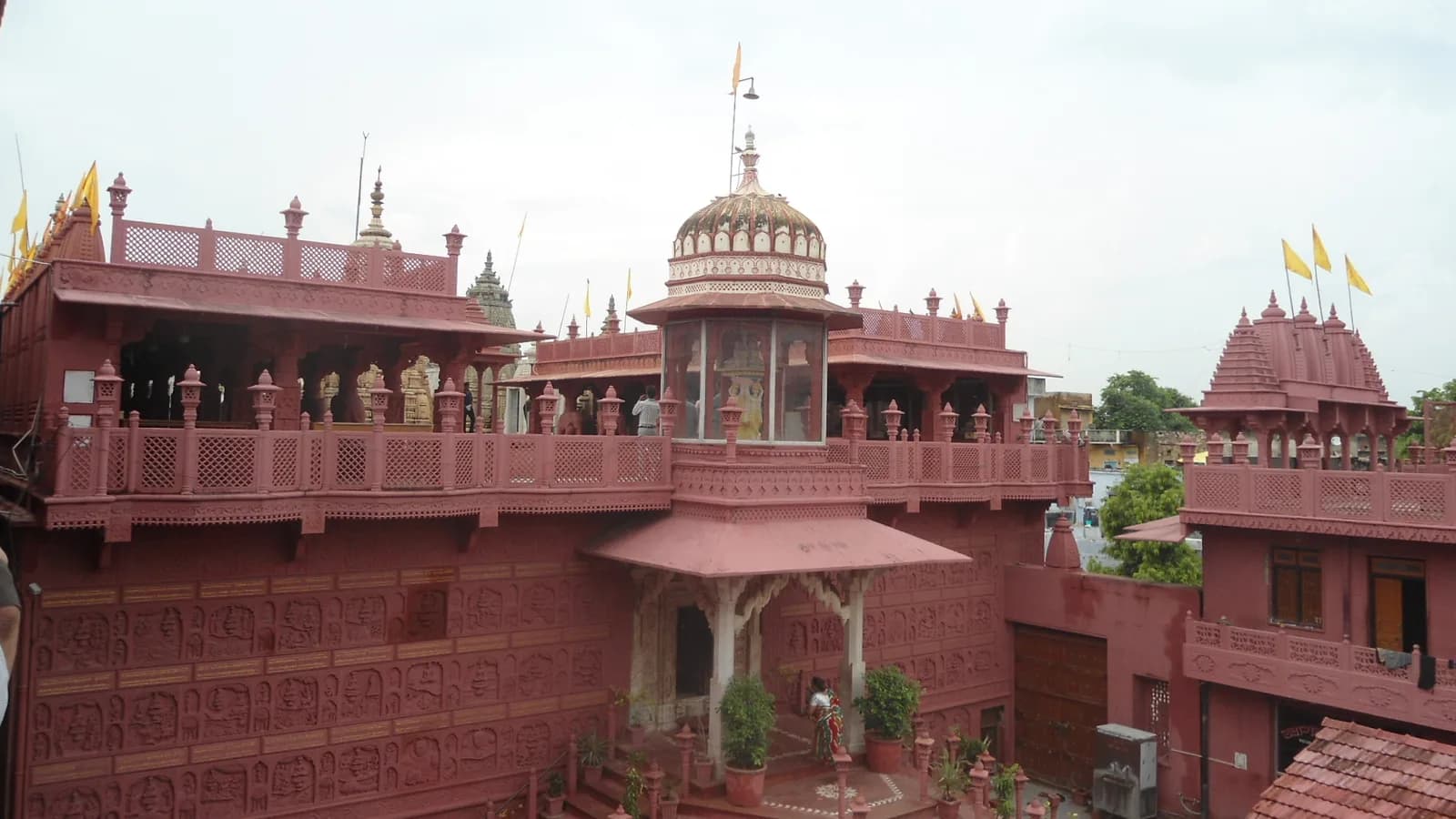
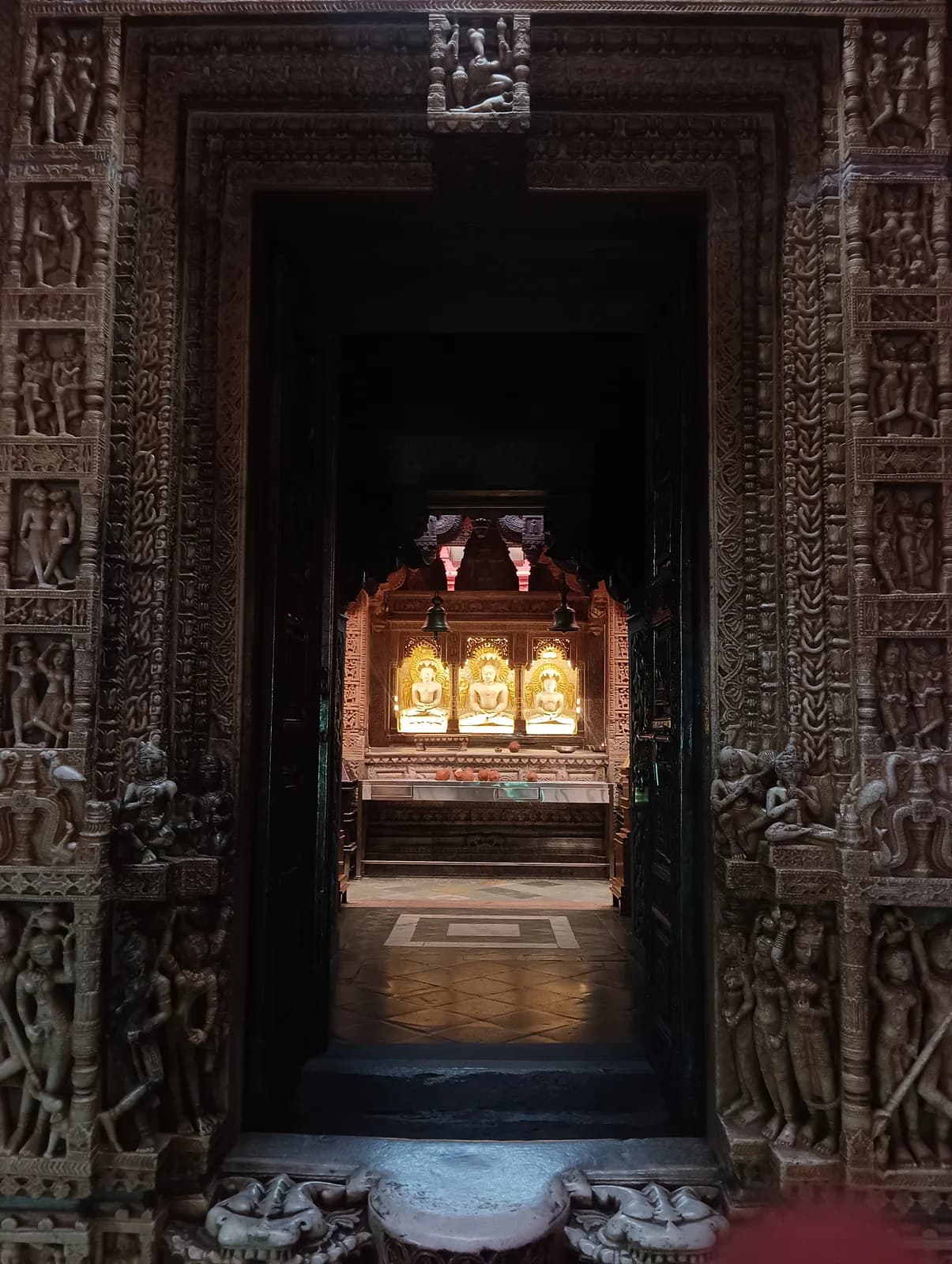
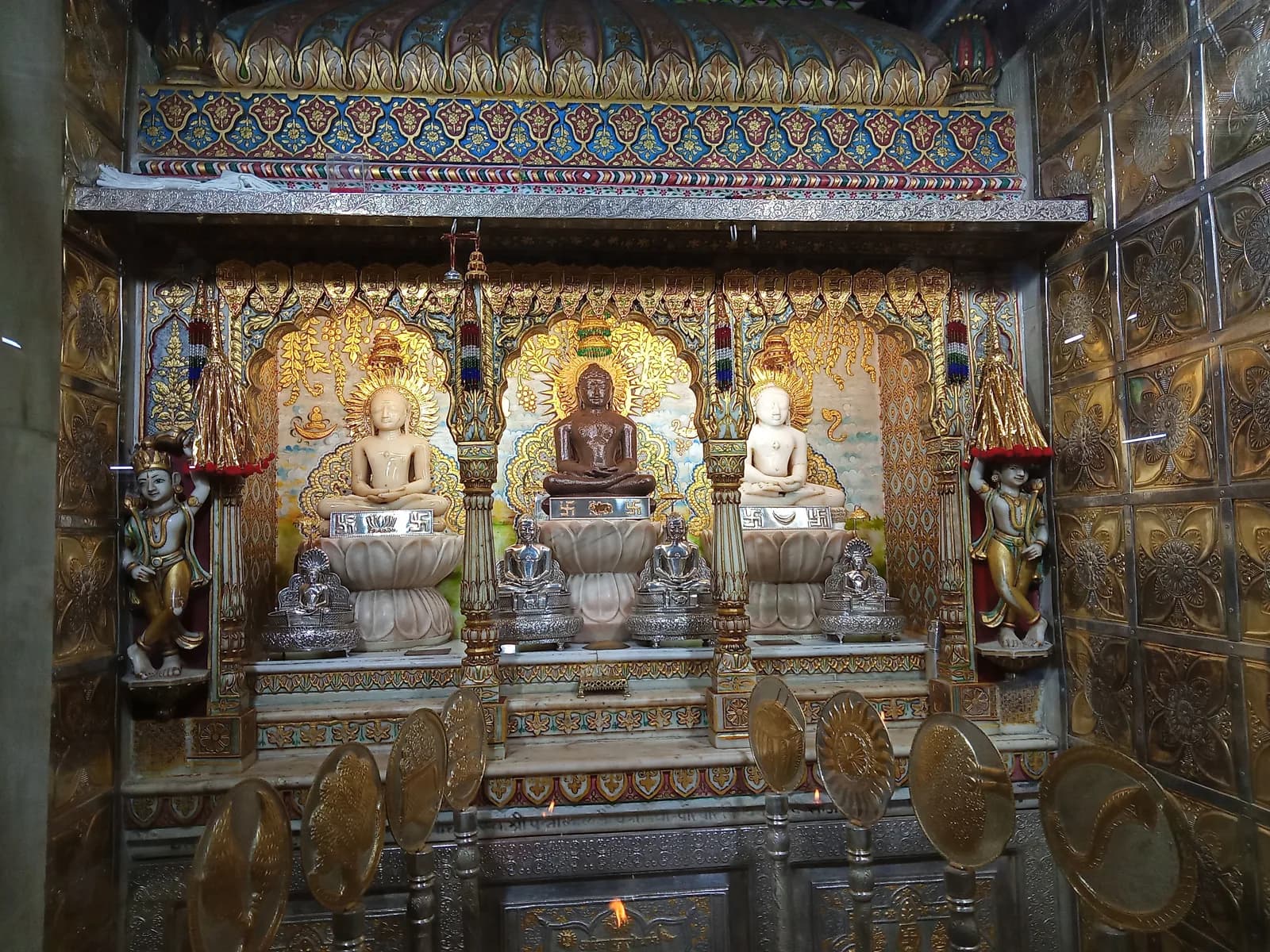
Sanganer is more than its crafts, and the town holds a notable heritage landmark: the Shree Digambar Jain Atishay Kshetra Mandir Sanghi Ji, a revered red sandstone Jain temple with roots in the 10th century. Its soaring shikharas, intricate white marble carvings and peaceful courtyard make it a worthwhile stop between the workshops, and it is open daily from 5:30 AM to 10 PM with free admission.
If you visit the temple, observe the etiquette of a Jain shrine: leave all leather items, belts, wallets and bags, and your footwear outside the premises, and ask before taking photographs. The temple is a living place of worship, so dress and behave respectfully. It is one of Sanganer's quieter pleasures, a moment of calm amid the busy printing and paper lanes, and it rounds out a sense of the town as a place of both craft and faith. Jaipur's layered religious heritage, Hindu, Jain and more, is a theme our guide to the multi-faith Golden Triangle explores across the wider region.
The old quarters of Sanganer and the Kagzi Mohalla reward a wander too, with their narrow, lively lanes, rooftop drying terraces and open dyeing yards. These are working streets rather than a tourist strip, so wear comfortable walking shoes and be ready to step around the business of a town that is making things, which is exactly what gives Sanganer its authentic, unpolished appeal.
How to Reach Sanganer
Sanganer sits about 16 km south of central Jaipur, right next to Jaipur International Airport, which makes it an easy stop on an arrival or departure day as well as a half-day trip from the city. From central Jaipur, around M.I. Road or the Pink City, it takes 30 to 45 minutes by cab, auto-rickshaw or local bus down Tonk Road.
Its position by the airport is a genuine convenience. If you are flying in or out of Jaipur with a few hours to spare, Sanganer is close enough to fold a craft visit around the flight, picking up handmade paper or a block-printed scarf on the way. For a dedicated visit, a cab for the half-day is the comfortable choice, as it lets you move between the scattered workshops and the temple without hunting for transport in between.
If you are arriving in Jaipur from elsewhere on the circuit, our distance guides for Delhi to Jaipur and Agra to Jaipur set out the road options, and most of our guests reach the city and Sanganer by chauffeured car, which handles the scattered craft stops comfortably. A base near the airport or the southern city puts Sanganer within easy reach, and our where to stay in Jaipur guide weighs the options.
Best Time to Visit Sanganer
The best time to visit Sanganer is from October to March, when Jaipur's daytime weather is pleasant for walking through open-air dyeing yards and across rooftop drying terraces. The summer months are hot work for a craft town where much of the action happens outdoors, so the cooler season is the clear choice.
The day and hour matter more here than at a monument. Visit on a weekday, between 10 AM and 4 PM, to see artisans actively printing and pulping, because many units close on Sundays and some pause during the afternoon lunch break. A Sunday or a late-afternoon visit can mean shuttered workshops and no craft to watch, which misses the whole point of the trip. Plan for half a day to take in a printing unit, a paper mill, the temple and a little shopping without rushing.
Because the timing is so particular, Sanganer rewards a little planning, and it slots naturally into a broader craft-and-culture day on a longer trip, the kind our two-to-three day Jaipur itinerary is built around. On a shorter stay, it can be the craft highlight of a single focused day, as our Jaipur one-day itinerary shows, especially tied to an airport arrival or departure. Sanganer itself winds down by evening, so if you want to see the Pink City glow after dark once you are back, our guide to places to visit in Jaipur at night covers the lit monuments and bazaars.
A Craft Lover's Day in and Around Sanganer
For travellers who really take to the crafts, Sanganer is the anchor of a wider artisan circuit south and west of Jaipur. The obvious extension is Bagru, the neighbouring block-print village with its indigo and mud-resist dabu work, a short hop away and an easy pairing for a full day of textiles; seeing Sanganeri and Bagru prints made side by side teaches you the difference better than any shop ever could. Between the two villages you can watch the whole arc of Rajasthani block printing, from carved teakwood blocks and dye vats to the finished cloth drying in the sun.
A craft-focused day might start with a morning printing workshop in Sanganer, move to a paper mill to watch sheets lifted from the pulp, pause at the Sanghi Ji temple, and finish with a browse through the showrooms for stoles, journals and seed paper. With more time, the artisan trail runs further: the region around Jaipur and toward Ajmer and Pushkar is dotted with craft and fair towns, and our guide to the Jaipur to Pushkar distance sets out that onward route for anyone extending a craft and culture trip. Sanganer rewards this slower, maker-focused way of travelling, where the point is not to tick off a monument but to understand how something is made and carry a piece of it home.
Because the workshops and mills are scattered across the town and its old colonies, a little planning pays off. Grouping the printing units, a paper mill and the temple into a sensible loop saves backtracking through the narrow lanes, and a half-day given over to the crafts, rather than a rushed hour, is what turns a Sanganer visit from a shopping stop into a genuine encounter with a living tradition.
What to Buy in Sanganer
Sanganer is a buyer's town, and shopping at the source means better prices and guaranteed authenticity. The obvious buys are the crafts the town is famous for, taken home straight from the makers:
- Block-printed textiles. Scarves, stoles, dress materials, bedsheets, table covers and cushion covers in the delicate Sanganeri floral style.
- Handmade paper. Journals, stationery, lampshades, gift boxes, and seed paper that grows into plants when sown.
- Your own printed cloth. A scarf or swatch you stamped yourself in a workshop, the most personal souvenir of all.
- Finer craft pieces. Larger printed furnishings and specialist papers from the bigger units.
Buying here supports the artisan families directly and gets you the genuine article at the source, rather than a marked-up or machine-made version in a city shop. For somewhere to eat around your visit, our guides to famous foods in Jaipur and places to eat in Jaipur point you to the dishes worth seeking out back in the city, since Sanganer itself is a working town rather than a dining destination.
Is Sanganer Worth Visiting
Sanganer is well worth visiting for anyone interested in craft, textiles or how things are made, and it offers something the forts and palaces cannot: a living, working tradition you can watch, try and buy at the source. Seeing a wooden block stamp a length of cotton, or a sheet of paper lifted by hand from a pulp vat, is a quietly memorable experience, and the GI-tagged Sanganeri print and the centuries-old Kagzi paper are genuine pieces of heritage rather than tourist trinkets.
It is not a conventional sightseeing stop, and it asks for the right timing, a weekday between 10 AM and 4 PM, to see the crafts actually happening; come on a Sunday and you may find shuttered units. It is also a working town, dusty and busy rather than polished. But for travellers who want to understand the crafts behind Jaipur's shops, to take home something real and perhaps something they made themselves, Sanganer delivers richly. It is a stop I recommend warmly to the curious, especially tied to an airport day, and it rounds out a Jaipur trip with a true sense of the region's artisan soul.
Travel Tips for Visiting Sanganer
A few habits make a Sanganer visit rewarding. Come on a weekday between 10 AM and 4 PM to catch the artisans at work, and avoid Sundays and the afternoon lunch lull when many units close. Book a block-printing workshop ahead if you want a hands-on session, and set aside half a day to take in a printing unit, a paper mill and the temple without rushing. Wear comfortable walking shoes for the narrow, lively lanes of old Sanganer and the Kagzi Mohalla, and dress for a working town rather than a polished attraction. If you visit the Sanghi Ji Jain temple, leave leather items and footwear outside and ask before photographing. Learn the reverse-side and registration-joint tests before you buy, so you can tell a genuine hand print from a copy, and buy at a working unit for the best price and authenticity. Finally, tie the trip to an airport arrival or departure if you can, as Sanganer sits right beside the airport and makes superb use of a few spare hours. Go with curiosity rather than a shopping list, and the town repays it many times over, in craft, stories and finds you will not see anywhere else.
Plan Your Trip With Us
Sanganer is at its best woven into a well-timed Jaipur day, and that is what we arrange. As Delhi Agra tours specialists, we build private, chauffeur-driven Jaipur itineraries that fit a block-print workshop, a paper mill and the Sanghi Ji temple around the forts, palaces and bazaars, or neatly onto an airport arrival or departure, timing the visit for a weekday when the craft is in full swing. Our guides know which units welcome visitors and how to tell the genuine craft from the copies.
Tell us your travel dates, group size and what you most want from Jaipur, and we will put together a plan and a price built around you. Message us on WhatsApp at +91 7302265809 and we will take it from there.
Related Guides
Enquire Now
What our travellers say
“Our Golden Triangle honeymoon was flawless. Sunrise at the Taj with a private guide felt like a dream — every detail was handled.”
“As a first-time visitor to India, I felt completely safe and looked after. The driver and guide were superb professionals.”
“Travelling with two kids is hard, but they made it effortless. Great pacing, clean cars and zero surprises on price.”
“Booked the Agra day trip on short notice and it went off without a hitch. The guide's history knowledge made the Taj come alive.”
“Best decision of our India trip. Car was spotless, driver was punctual every single day, and the itinerary never felt rushed.”
“Organised a same-day Agra trip for my parents. Communication before and during the trip was excellent — genuinely stress-free.”
“Sunrise at the Taj Mahal was magical. Our guide spoke great English and answered every question with patience.”
“Three generations travelling together and everyone was comfortable — good vehicle, sensible stops, and no hidden costs.”
“I've used a few tour operators across Asia and this was among the smoothest. Fair pricing and they actually answer the phone.”
“Our custom Rajasthan-Agra combo was planned around our budget without cutting corners on comfort. Highly recommend.”
“Solo female traveller here — I felt safe throughout. The driver was respectful and the whole trip was timed perfectly.”
Ready to Explore
The Pink City?
Experience the Amber Fort, Hawa Mahal, City Palace, and the colorful bazaars of Jaipur with our expert-guided premium tours of Rajasthan's capital.

Jaipur
Premium Tour Package
Questions
Frequently asked questions
Why is Sanganer famous?
Sanganer is famous as a historic craft town near Jaipur, celebrated for two living traditions: GI-tagged Sanganeri hand block-printed textiles and eco-friendly handmade paper. It is a working artisan hub where printing studios, paper mills and medieval Jain temples sit side by side, and it is the source of the delicate floral prints sold across Jaipur.
What is the difference between Sanganeri and Bagru prints?
What is Sanganer handmade paper?
What are the timings to visit Sanganer?
How do I reach Sanganer from Jaipur?
Can I do a block printing workshop in Sanganer?
How do I spot an authentic hand block print?
Is Sanganer the same as Sanganeri Gate in Jaipur?
Is there a temple to visit in Sanganer?
Is Sanganer worth visiting?
Explore more
Plan your Sanganer trip with us

Interested in Sanganer Jaipur: Block Printing and Handmade Paper Town Guide?
Chat with our travel team for a custom quote, or browse every package.
Related Attractions
9Sanganer Jaipur on the map
Open in Google MapsReady to explore Sanganer Jaipur: Block Printing and Handmade Paper Town Guide?
Book your private tour today and experience the magic of India's rich heritage.