Lothian Cemetery, Kashmere Gate: History and Visitor Guide
Visiting Lothian Cemetery at Kashmere Gate, the oldest Christian cemetery in Delhi? Its colonial history, the debunked ghost legend, timings and how to reach.
In a Nutshell
“Lothian Cemetery, near Kashmere Gate in Old Delhi, is the oldest Christian burial ground in the city, established in 1808 during British East India Company rule. A haunting open-air record of early colonial Delhi, the cholera epidemics of the 1800s and the siege of 1857, it holds grand colonial tombs, a towering Celtic Cross memorial, and the remarkable Islamic-style domed tomb of Thomas Dunne built by Colonel James Skinner. Famous for a ghost legend that historians have debunked, it is a free, atmospheric heritage site best visited in daylight. It features on our Old Delhi heritage walks, run by a unit of Experience My India.”
Lothian Cemetery is one of the most atmospheric and historically layered of Old Delhi's hidden sites, a profoundly moving colonial burial ground that reads like an open-air archive of the early British presence in the city, the devastating epidemics of the 19th century, and the bloody upheaval of 1857. For the traveller drawn to colonial history, old architecture, genealogy, or the folklore of Delhi, it is a haunting and rewarding daytime stop. Our team at Delhi Agra Tour Packages is glad to include it for guests who enjoy the deeper, quieter corners of the old city, and it adds an unusual, historical dimension to a wider Golden Triangle tour through the capital.
I am Abhay Sharma, Delhi born and a Golden Triangle guide since 2015, and Lothian Cemetery is one of the more unusual and affecting places I take curious guests, because it holds so much history in one quiet, overgrown enclosure: the oldest Christian graves in Delhi, the tombs of those who died in the great cholera outbreaks and the siege of 1857, extraordinary architecture, and one of the city's most famous, and most thoroughly debunked, ghost legends. This guide gathers everything I would tell a visitor beforehand, checked against current information, including the history, the architecture, the folklore and the facts, and the timings and directions.
Details
Lothian Cemetery at a glance
| Detail | Information |
|---|---|
| What it is | The oldest Christian burial ground in Delhi |
| Established | 1808, under the British East India Company |
| Closed to burials | 1867 (fully sealed by the 1960s) |
| Location | Lothian Road, near Kashmere Gate, Old Delhi |
| Managed by | Archaeological Survey of India (ASI) |
| Known for | 1857 history; colonial tombs; a debunked ghost legend |
| Nearest metro | Kashmere Gate (Red, Yellow, Violet Lines) |
| Entry | Free |
Lothian Cemetery timings
| Detail | Information |
|---|---|
| Open | Every day |
| Hours | Officially about 10:00 AM to 5:00 PM |
| Important | Gates often locked; visit in daylight only |
Lothian Cemetery is officially open every day from around 10:00 AM to 5:00 PM, but because of its dilapidated state, its isolated trails and its local reputation, the heavy iron gates are often locked, and visitors are advised to come only during peak daylight hours, as entry after sunset is not permitted and police patrol the area. These timings are current at the time of writing and can vary, and the gate may be closed, so it is wise to check locally before a special trip.
Entry fee
| Visitor | Fee |
|---|---|
| All visitors | Free; no ticket required |
How to reach Lothian Cemetery
| From | Route |
|---|---|
| Kashmere Gate metro (Red, Yellow, Violet) | Nearest hub; exit Gate 4, then a 700 m walk |
| Along Lothian Road | A short walk past the St James Church vicinity |
| Old Delhi GPO | The cemetery sits directly beside it |
| By car | Street parking near Kashmere Gate, then walk |
What is Lothian Cemetery?
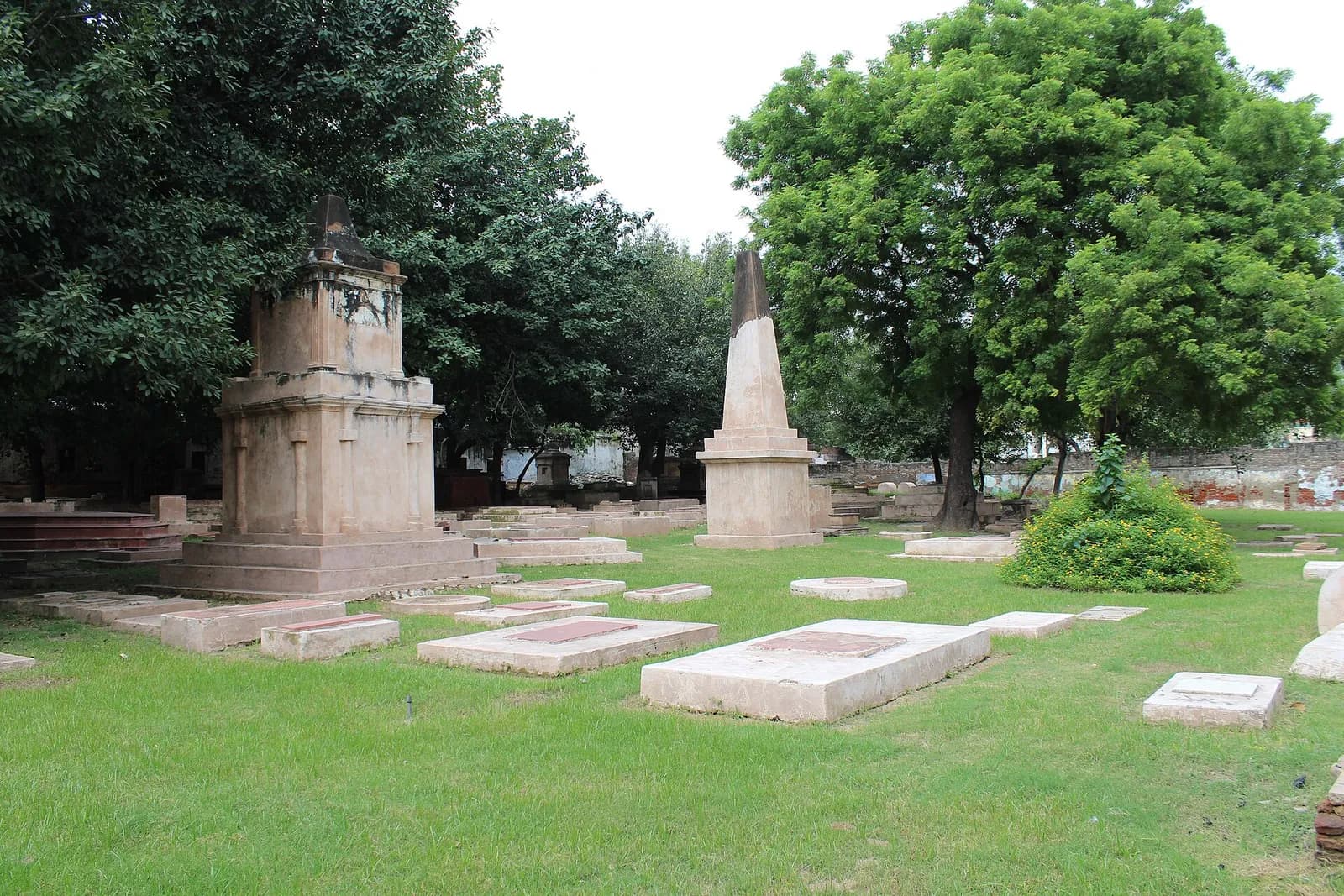
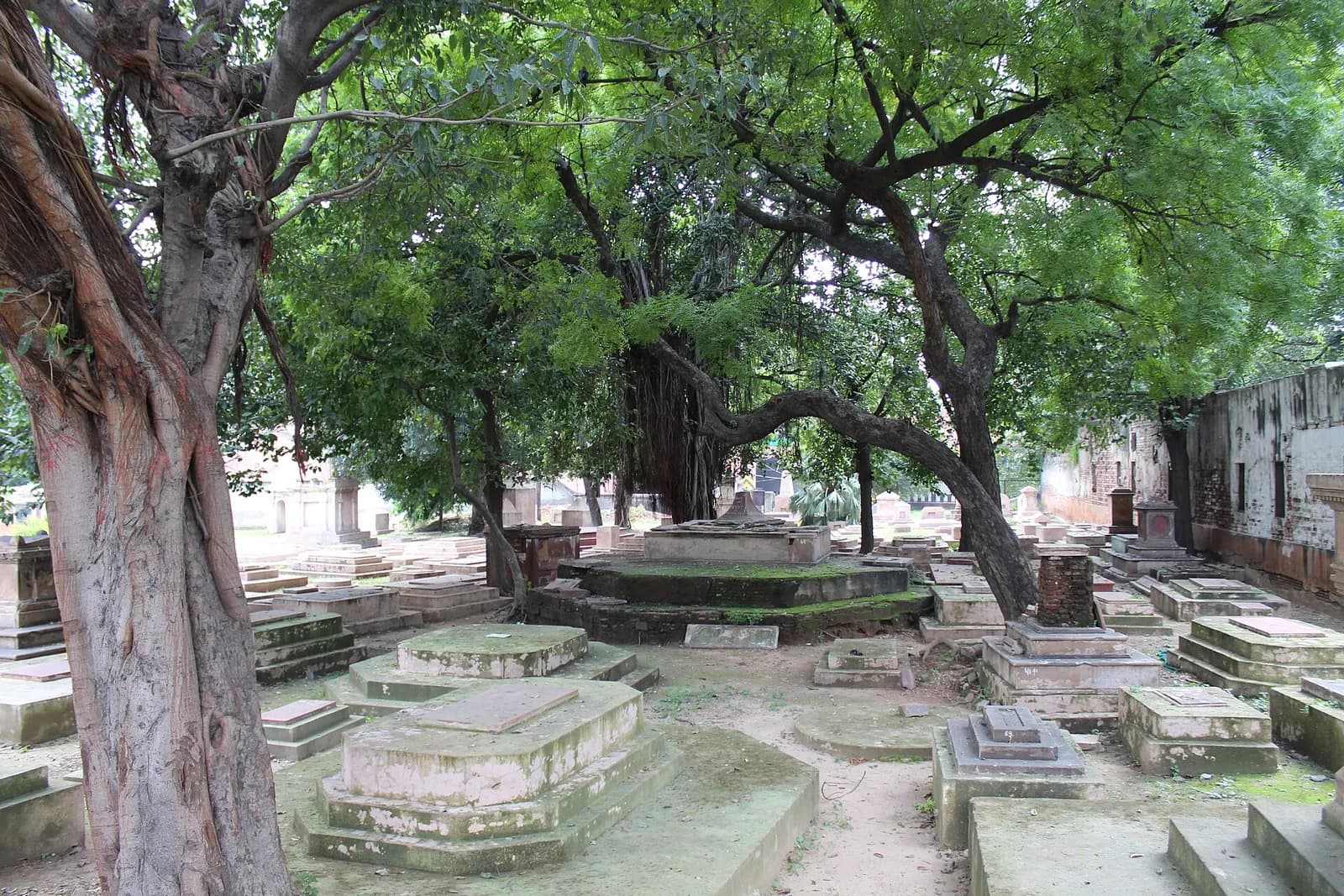
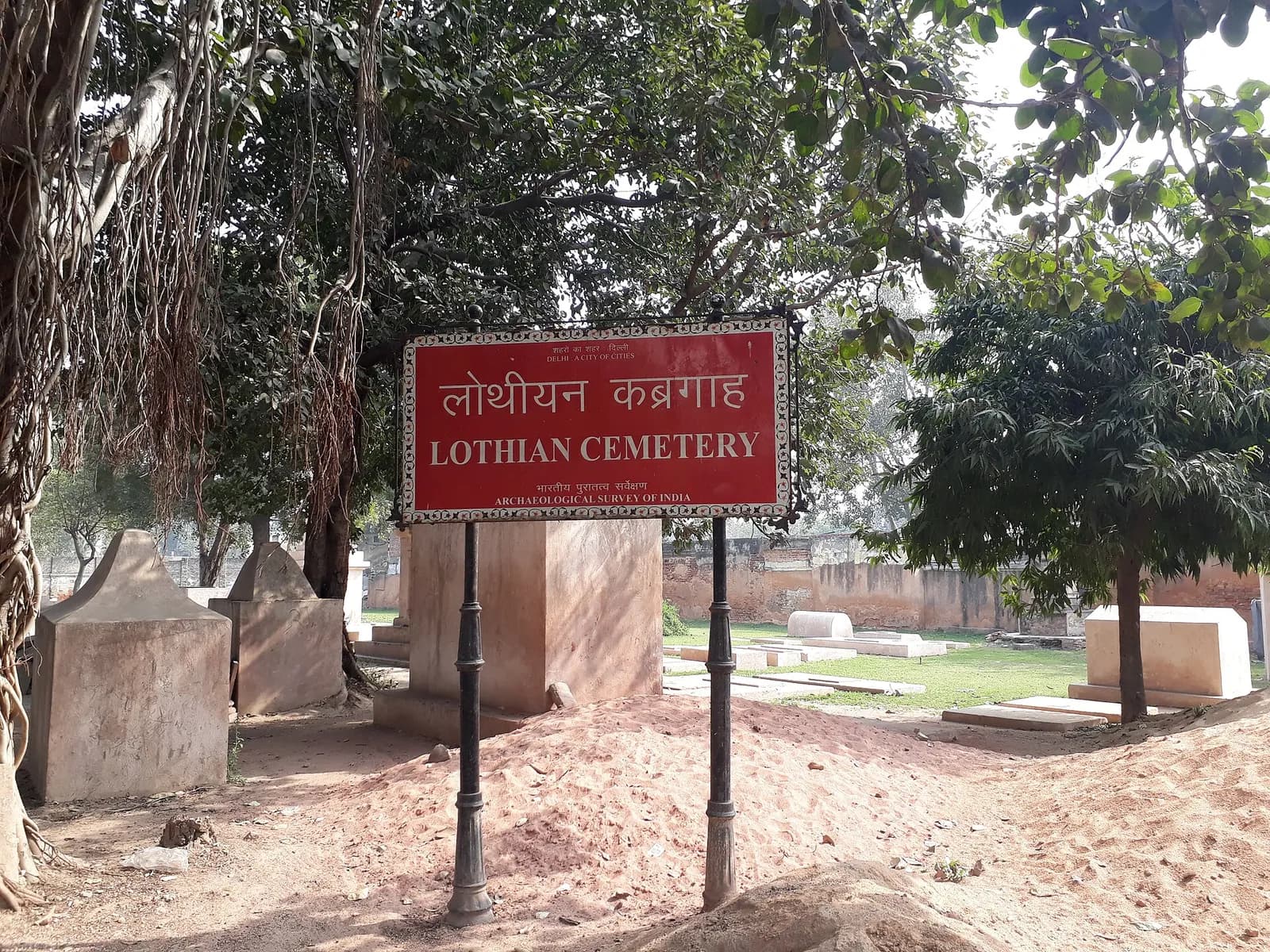
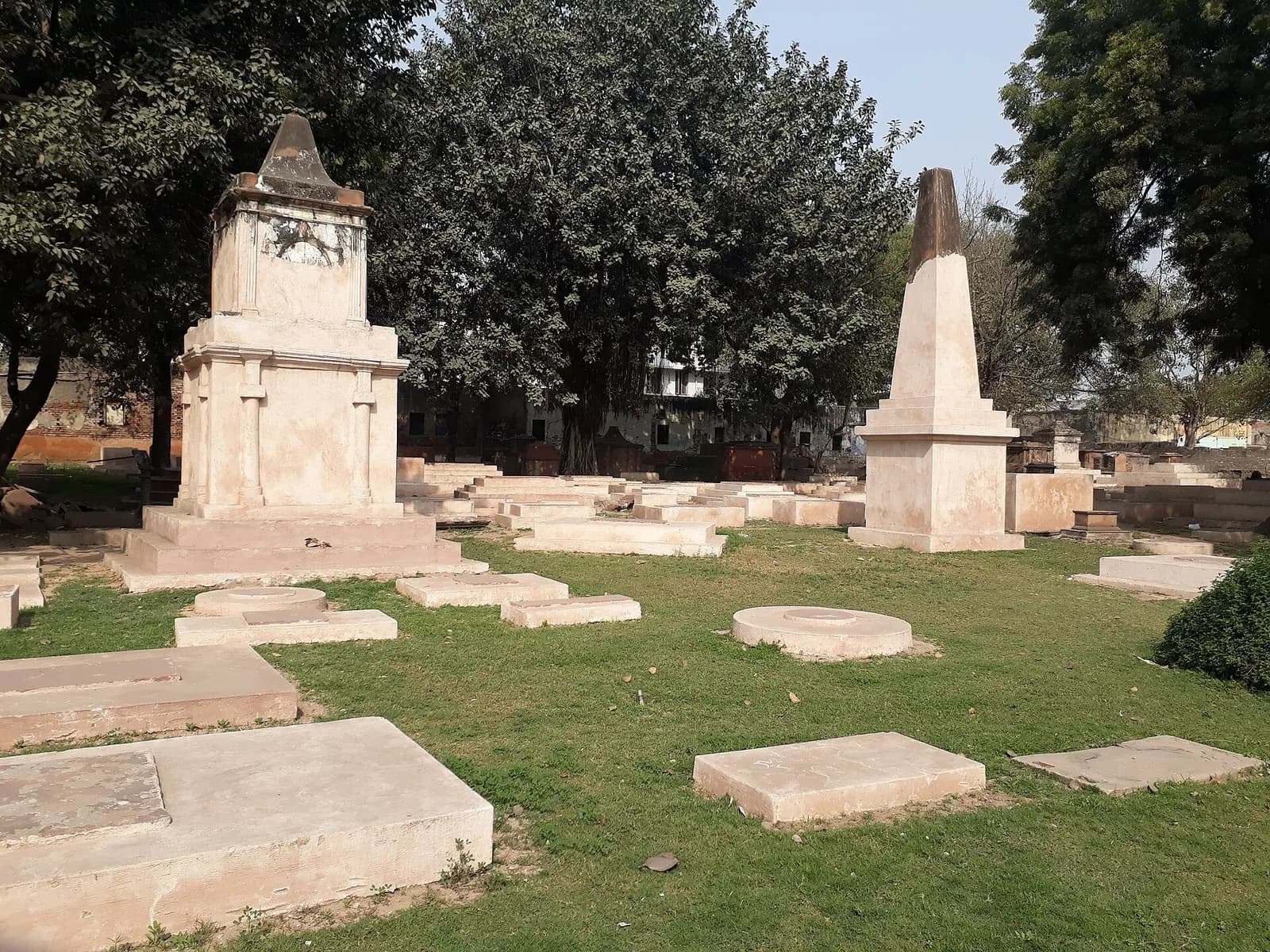
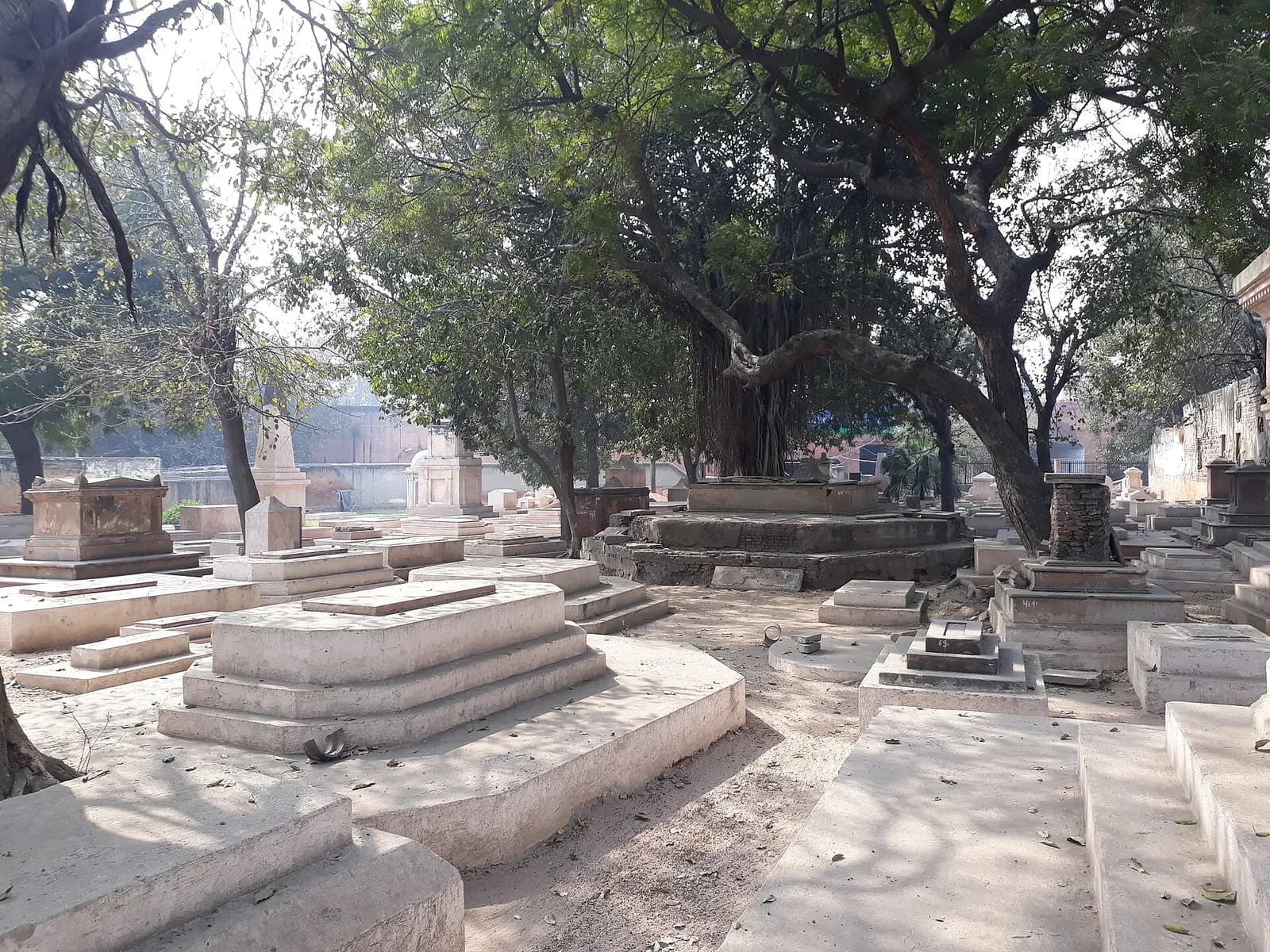
Lothian Cemetery is the oldest Christian burial ground in Delhi, a profoundly historic and atmospheric colonial cemetery near Kashmere Gate in the old city, established in 1808 during the expanding rule of the British East India Company. It functions today as a haunting open-air archive of the earliest decades of British Delhi, the catastrophic cholera and typhoid epidemics of the 1800s, and the bloody aftermath of the Indian Uprising of 1857. Within its overgrown, tree-shaded grounds lie grand colonial tombs in a mix of European and Indian styles, a towering Celtic Cross raised as a memorial to the soldiers who died in the 1857 siege, and the remarkable Islamic-style domed pavilion tomb of Thomas Dunne, built by the famous Anglo-Indian commander Colonel James Skinner. Protected by the Archaeological Survey of India but long neglected, it is also one of Delhi's most famous "haunted" sites, the subject of a ghost legend that historians have shown to be a case of mistaken identity. Free to enter and deeply evocative, it is best visited in daylight, and for the traveller it is one of the most moving and unusual hidden corners of Old Delhi.
Several things make it special, and they are worth drawing out:
- The oldest Christian cemetery in Delhi. Established in 1808, the first Christian burial ground in the city.
- A record of 1857 and the epidemics. The resting place of those who died in the cholera outbreaks and the siege of 1857.
- Grand colonial tombs. Monumental graves in a striking mix of Classical European and Indo-Saracenic styles.
- The Celtic Cross and the Dunne tomb. A towering 1857 memorial cross and an Islamic-style domed tomb built by Colonel James Skinner.
- A famous but debunked legend. One of Delhi's best-known ghost stories, shown by historians to be a folklore mix-up.
It is one of the most atmospheric of the hidden places to visit in Delhi and a haunting entry among the offbeat things to do in Delhi.
History of Lothian Cemetery
The history of Lothian Cemetery is the early history of British Delhi itself, written in stone across its graves, and knowing it gives the site its real weight. The cemetery spans the first, often brutal, decades of colonial rule in the city:
- The oldest Christian ground. The cemetery was officially established in 1808, during the expanding dominion of the British East India Company, and received burials continuously for nearly six decades before closing to new plots in 1867, being fully sealed by the 1960s.
- The cholera years. Through the early 1800s, the primitive sanitation of the city triggered devastating cholera and typhoid outbreaks, and the cemetery holds long communal rows of graves of British administrators, merchants, women and infants who died in these epidemics.
- The siege of 1857. The cemetery carries great significance from the Revolt of 1857, the First War of Indian Independence. Positioned near the historic British Magazine arsenal, which loyalists blew up to keep it from the Indian sepoys, it became a principal burial ground for European soldiers, garrison staff and Indian Christian converts killed during the intense Siege of Delhi.
This history makes Lothian Cemetery a uniquely powerful record of a turbulent age. Its graves tell of the heavy toll that disease took on the early British community, especially its women and children, and of the violence and upheaval of 1857, when Delhi was the epicentre of the uprising. The cemetery is, in effect, a chronicle in stone of the vulnerability and the conflict of early colonial Delhi, a place where the human cost of the era is laid out row by row. For the visitor, walking among these graves, reading the ages and dates where the inscriptions survive, is a moving and sobering encounter with a decisive and often tragic period of the city's past.
Architecture and the notable tombs
Architecturally, Lothian Cemetery is fascinating, for it shows early British colonial burial design adapting to the local climate and to North Indian building styles, and its notable monuments are well worth seeking out. The tombs are far grander and more varied than a typical European graveyard:
- A mix of styles. Rather than simple flat slabs and small crosses, the cemetery holds many monumental tombs in Classical European and Indo-Saracenic styles, built by wealthy British families who raised large structures over the graves to shield the masonry from the fierce sun and monsoon.
- The Celtic Cross. The most commanding feature is an enormous towering stone Celtic Cross, erected by the British administration after 1857 as a collective memorial to the officers and soldiers of the Delhi Field Force who died in the uprising.
- The tomb of Thomas Dunne. The most striking structure is the tomb of Thomas Dunne, commissioned by his friend, the legendary Anglo-Indian commander Colonel James Skinner, built as a grand eight-pillared brick pavilion crowned with a high red sandstone dome, closely echoing traditional Islamic mausoleum architecture.
- Obelisks and sarcophagi. The grounds are dotted with tall pyramid-like stone obelisks and rectangular sarcophagi of local grey quartzite faced with white lime plaster, many now cracked apart by the roots of the old trees that have grown through them.
This combination makes the cemetery an outdoor museum of early colonial funerary architecture, where European forms met Indian materials, artisans and styles to produce something distinctive. The Islamic-style domed tomb of Thomas Dunne, built by Skinner, the great Anglo-Indian soldier who straddled two cultures, is a perfect emblem of this fusion, and the towering Celtic Cross is a powerful reminder of the 1857 dead. The gradual cracking of the great tombs by tree roots over two centuries gives the whole place its haunting, overgrown character. For the visitor, picking out these monuments, the cross, the Dunne tomb, the grand obelisks, is one of the quiet pleasures of a visit, and they tell the story of how the British built, and mourned, in early Delhi.
The ghost legend and the facts
In modern Delhi's popular culture, the real history of Lothian Cemetery is often overshadowed by its fame as a "haunted" site, and it is worth addressing the legend plainly, because the facts are more interesting than the myth. The story, and its debunking, run as follows:
- The legend. Local folklore tells of a young British officer, remembered as "Sir Nicholas," who is said to have fallen in love with a local woman, been thwarted, and in his grief taken his own life, his restless spirit said to roam the overgrown trails at night.
- The real figure. Historians have shown this to be a confused folk memory of a real person, Brigadier General John Nicholson, the British commander who led the storming of Kashmere Gate in 1857 and was fatally wounded in the chest during the assault, dying in Delhi. He was in fact buried not here but in the separate Nicholson Cemetery outside Kashmere Gate.
- The mix-up. Over decades of oral retelling, a tragic romance and the real military death were conflated into the fictional "headless ghost" of Lothian Road.
- The reality. Investigations by rationalist and paranormal researchers alike have thoroughly debunked the ghost stories, attributing the eerie reputation entirely to the cemetery's neglect, its dense wild vegetation, and the deep shadows of its old banyan trees, rather than anything supernatural.
The sensible and respectful way to understand Lothian Cemetery is therefore to see the ghost legend as exactly that, folklore, and a garbled one at that, built on a genuine historical figure and the naturally eerie atmosphere of a neglected old graveyard. The true story, of General Nicholson, the siege of 1857, and the confusion of oral memory, is far richer than the myth. For the visitor, this means Lothian Cemetery can be appreciated for what it genuinely is, a moving historical site, without fear of the supernatural, and the debunked legend becomes simply another interesting layer in its story.
Lothian Cemetery and Nicholson Cemetery
Because of the ghost legend, visitors often confuse Lothian Cemetery with the nearby Nicholson Cemetery, so it is worth being clear about the difference. They are two separate burial grounds near Kashmere Gate. Lothian Cemetery, established in 1808, is the older of the two and the oldest Christian cemetery in Delhi, the subject of the "Sir Nicholas" ghost legend. Nicholson Cemetery, a later ground just outside Kashmere Gate, is where Brigadier General John Nicholson, the real figure behind the muddled legend, is actually buried, and it takes its name from him. The two are often mentioned together because the folklore wrongly links the ghost of Lothian to a figure buried in Nicholson. For the visitor interested in the full story, the two cemeteries make a natural pair on an Old Delhi heritage walk, each a poignant record of the colonial city and the upheaval of 1857, and visiting both helps untangle the famous legend from the real history.
Conservation and the cemetery's vulnerability
It is worth knowing the fragile state of Lothian Cemetery, as it affects both the visit and the site's future. Despite its legal protection as an ASI monument, the cemetery faces serious threats. Over the decades it has suffered from encroachment, dense weed growth and vandalism, with many of the historic marble plates bearing detailed epitaphs broken or stolen, so that much of the precise record of who lies here has been lost. The peaceful, forested character of the ground was also permanently changed during the British Raj, when the main Delhi Junction railway line was routed right past its northern wall, subjecting the old brick vaults to constant vibration from passing trains. Recent stabilisation efforts by heritage bodies have focused on rebuilding the collapsed perimeter walls to secure the remaining tombs. For the visitor, this means Lothian Cemetery is a vulnerable and atmospheric ruin rather than a manicured heritage park, its neglect part of both its poignancy and its problems, and a reminder of how much of Delhi's layered history survives only precariously. Visiting respectfully, and supporting heritage awareness, is part of helping such places endure.
What to expect at Lothian Cemetery
A visit to Lothian Cemetery is atmospheric, moving and best approached with sensible care, quite unlike a conventional monument, and knowing what to expect helps you prepare. The cemetery is an overgrown, tree-shaded enclosure in a busy part of Old Delhi near Kashmere Gate, hemmed in by the city and the railway, so the contrast between the quiet graves and the bustle outside is striking. If the gate is open, you can walk the trails among the grand old tombs, seek out the towering Celtic Cross and the domed Dunne tomb, read the surviving inscriptions, and absorb the deeply evocative atmosphere of the oldest Christian ground in Delhi. The whole visit takes perhaps 45 minutes to an hour.
A few practical points are important. Visit only in daylight, ideally in the middle of the day, as the grounds are isolated and the gate is often locked, so it is wise to check before going and not to come alone. Wear sturdy shoes for the uneven, overgrown ground, watch your step among the cracked tombs, and be respectful of what is, after all, a burial ground. As a neglected and secluded site, ordinary caution about surroundings and belongings applies. The cemetery is close to St James Church and the historic Kashmere Gate, which make natural companions on a walk. For the visitor, the key is to approach Lothian Cemetery as a poignant and fragile historical site to explore quietly and respectfully in daylight, appreciating its deep history and atmosphere rather than chasing its debunked ghost stories.
Visiting tips
A few pointers make a visit to Lothian Cemetery smoother and safer:
- Visit only in daylight, ideally midday, and check whether the gate is open before going.
- Do not go alone, as the grounds are secluded and overgrown.
- Wear sturdy shoes and watch your step among the uneven, cracked tombs.
- Seek out the Celtic Cross and the Dunne tomb, the cemetery's most notable monuments.
- Pair it with St James Church and Kashmere Gate on an Old Delhi heritage walk.
- Be respectful, as this is a historic burial ground.
- Treat the ghost stories as folklore, and enjoy the real history instead.
- Allow 45 minutes to an hour for the visit.
The key point is to treat Lothian Cemetery as a moving, fragile historical site to explore quietly and respectfully in daylight, appreciating its colonial history and architecture, ideally as part of a wider Kashmere Gate heritage walk.
Best time to visit Lothian Cemetery
The best time to visit is during the cooler months, from October to March, when exploring the overgrown grounds is comfortable, and within the day during the middle hours, in full daylight, when the gate is most likely to be open and the site is safest to explore. A cool winter day is ideal, pleasant for walking the shaded trails among the old tombs. The summer months are hot and the dense vegetation makes the enclosure humid, and the monsoon leaves the ground muddy and overgrown, so the winter window is clearly best. Whatever the season, the firm rule is to visit in daylight and never after dark, as the cemetery is isolated and closed in the evening. Because the visit is fairly short, it combines well with the other Kashmere Gate heritage sites. Our guide to the best time to visit Delhi sets out the seasons across the city in more detail.
How to reach Lothian Cemetery (nearest metro)
Lothian Cemetery stands on Lothian Road near Kashmere Gate in Old Delhi, directly beside the old General Post Office, and is easy to reach by metro. The nearest station is Kashmere Gate, a major interchange for the Red, Yellow and Violet Lines, from which you exit at Gate 4 and walk about ten minutes, some 700 metres, down Lothian Road past the vicinity of St James Church to the cemetery wall. Because the cemetery sits in the busy heart of the old city, the metro combined with a short walk is by far the easiest approach, and street parking near Kashmere Gate is the option for those arriving by car. Set in the historic north of the old city, it makes a rewarding addition to a Delhi day tour or a heritage-focused New Delhi tour that explores the colonial and 1857 history of the city.
Places to visit near Lothian Cemetery
Lothian Cemetery sits near Kashmere Gate in the historic old city, so it is surrounded by sites rich in colonial and 1857 history, making it a natural part of a wider Old Delhi heritage walk. Close by are the historic Kashmere Gate itself, scene of the dramatic 1857 assault, and the beautiful St James Church, the oldest church in Delhi, built by Colonel James Skinner, as well as the nearby Nicholson Cemetery. A short way off lies the heart of Old Delhi, with the mighty Red Fort and the bustling lanes and markets of Chandni Chowk. The central monuments of New Delhi, including the ceremonial India Gate and the astronomical Jantar Mantar, are a short ride to the south, as is the old citadel of Purana Qila.
Further out, the capital's other great landmarks round out a full picture of the city: the serene Humayun's Tomb, the towering Qutub Minar, and the modern marvels of the Lotus Temple and Akshardham. For more of Delhi's history, the ruins of Feroz Shah Kotla, the sprawling Mehrauli Archaeological Park, the historic Hauz Khas Fort and the medieval stepwell of Agrasen ki Baoli are well worth adding, and our roundup of the important monuments of Delhi ties them together. To extend your trip, see our guide to nearby places to visit in Delhi.
Lothian Cemetery in your Delhi itinerary
For most visitors, Lothian Cemetery works best as a poignant, offbeat stop within a wider Kashmere Gate or Old Delhi heritage walk, rather than a destination on its own, since it is a short and sombre visit in a secluded spot. A natural plan is to combine the cemetery with the nearby St James Church, Kashmere Gate and Nicholson Cemetery, for a walk that traces the colonial city and the dramatic events of 1857, before continuing into the lanes of Old Delhi. The cemetery itself needs only 45 minutes to an hour, but its deep history, as the oldest Christian ground in Delhi and a record of the epidemics and the uprising, together with its atmosphere and its famous debunked legend, give it a resonance out of proportion to its size. It suits the history enthusiast, the lover of old architecture, and the traveller curious about the colonial and 1857 layers of Delhi.
If Delhi is your gateway to the wider Golden Triangle, Lothian Cemetery offers a moving and unusual encounter with the human cost of the city's colonial past, far from the grand Mughal monuments, in a quiet enclosure where disease, war and memory are written in stone. Many of my guests find it one of the more thought-provoking stops of an Old Delhi walk, precisely because it is so atmospheric and so little known, and it deepens their understanding of the many layers of Delhi before they travel on to Agra and Jaipur.
Travel tips for visiting Lothian Cemetery
A few pointers make a visit even better and safer:
- Go in daylight, ideally midday, and check whether the gate is open.
- Reach it via Kashmere Gate metro, exit Gate 4, then a short walk down Lothian Road.
- Do not go alone, and wear sturdy shoes for the overgrown ground.
- Pair it with St James Church, Kashmere Gate and Nicholson Cemetery for a full 1857 walk.
- Find the Celtic Cross and the domed Dunne tomb, the key monuments.
- Be respectful of a historic burial ground.
- Enjoy the real history rather than the debunked ghost tales.
- Allow 45 minutes to an hour for the visit.
If you would like a local guide to take you to Lothian Cemetery and the Kashmere Gate heritage sites, and tell the true history behind the legends, message our team on WhatsApp at +91 7302265809 with your travel dates and group size and we will shape the day for you.
Is Lothian Cemetery worth visiting?
Yes, for the history-minded traveller Lothian Cemetery is a genuinely moving and rewarding stop, one of the most atmospheric hidden sites in Old Delhi, provided you come in daylight and respectfully. There are few places where you can walk among the oldest Christian graves in the city, read the toll of the great cholera epidemics and the siege of 1857 in row after row of tombs, admire an extraordinary fusion of European and Islamic funerary architecture including a domed tomb built by Colonel James Skinner, and unravel one of Delhi's most famous ghost legends into its real historical roots. It is free to enter, deeply evocative, and quite unlike the grand Mughal and colonial monuments on the usual circuit. The caveats are real: it is neglected, secluded, often locked, and best visited in daylight and not alone. For the traveller who wants the poignant, human, colonial side of Delhi's history beyond the famous sights, Lothian Cemetery is well worth seeking out, and I recommend it to curious and respectful guests exploring the old city.
Plan your trip with us
At Experience My India, through our Delhi and Golden Triangle travel desk, we design unhurried, well paced trips that make room for moving, little-known places like Lothian Cemetery, and not just the famous monuments, with guides who can lead you safely through the Kashmere Gate heritage sites, tell the true history of 1857 and the colonial city, and separate the folklore from the facts. Whether you want a relaxed set of Delhi Agra tours or a full Golden Triangle route through Delhi, Agra and Jaipur, we plan around your pace, your interests and the right season. Share your dates and the kind of trip you have in mind through our enquiry page, tell us your group size, and we will put together an honest, tailored plan rather than a rushed checklist.
Related guides
- Places to visit in Delhi, for the wider picture
- Pair it with St James Church and Nicholson Cemetery, the other Kashmere Gate heritage sites
Enquire Now
Ready to Explore
The Heart of Delhi?
Explore the Red Fort, Qutub Minar, Humayun's Tomb, and the vibrant streets of Old Delhi with our expert-guided premium tours of India's capital city.

Delhi
Premium Tour Package
Questions
Frequently asked questions
What is Lothian Cemetery?
It is the oldest Christian burial ground in Delhi, near Kashmere Gate in the old city, established in 1808 under the British East India Company. It holds colonial tombs and records of the cholera epidemics and the siege of 1857.
Why is Lothian Cemetery historically important?
Is Lothian Cemetery really haunted?
What is the difference between Lothian Cemetery and Nicholson Cemetery?
What are the timings and entry fee?
Which is the nearest metro station?
What are the main things to see inside?
Who is buried at Lothian Cemetery?
Can I always get inside the cemetery?
How much time do I need?
Explore more
Plan your Lothian Cemetery trip with us

Interested in Lothian Cemetery, Kashmere Gate: History and Visitor Guide?
Chat with our travel team for a custom quote, or browse every package.
Related Attractions
9Ready to explore Lothian Cemetery, Kashmere Gate: History and Visitor Guide?
Book your private tour today and experience the magic of India's rich heritage.