
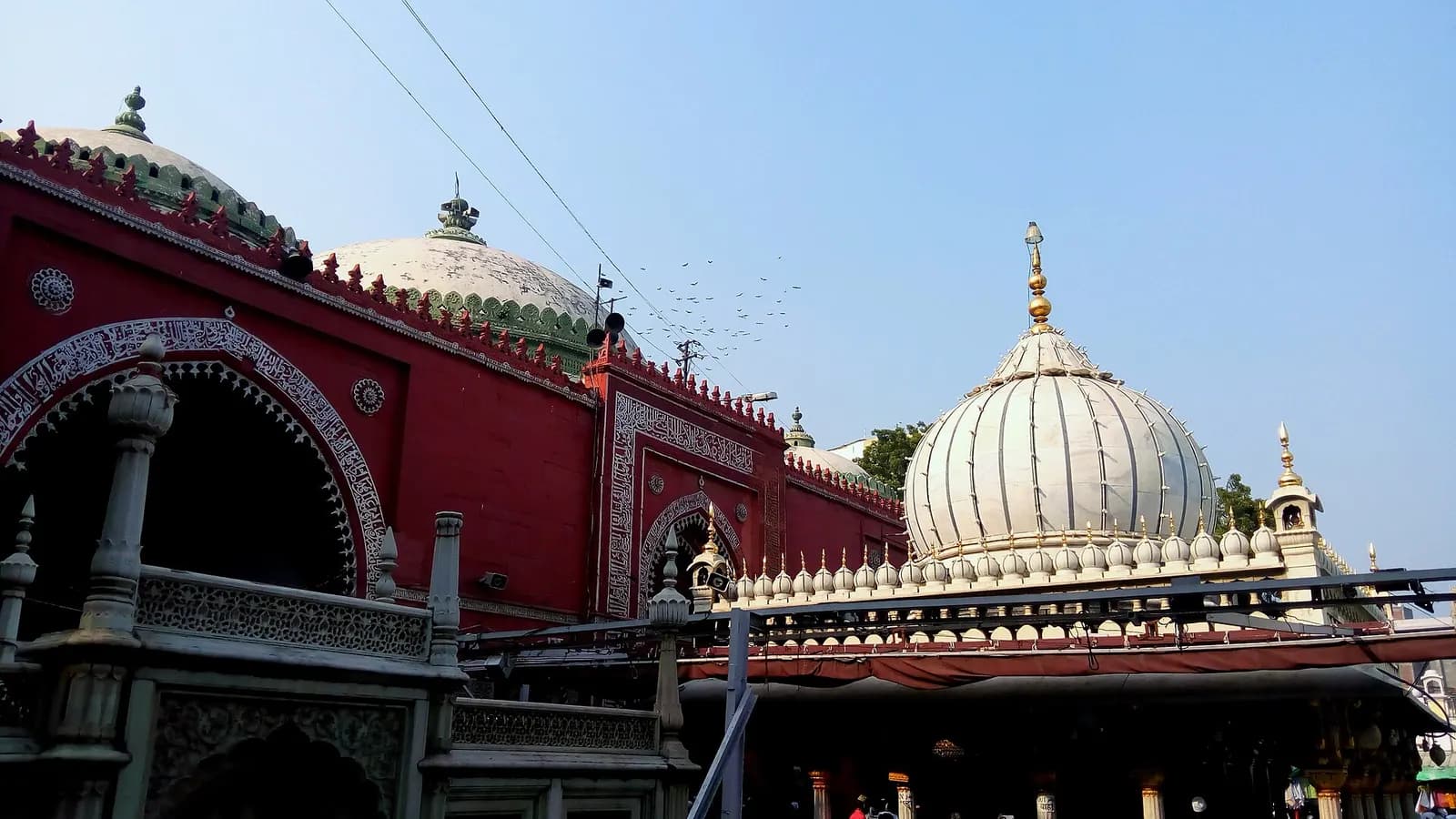


Nizamuddin Dargah Delhi: Timings, Qawwali, History and Visitor Guide
Visiting Hazrat Nizamuddin Dargah in Delhi? Timings, free entry, Thursday qawwali, the shrine and Amir Khusrau's tomb, dress code, metro and visitor tips.
In a Nutshell
“Hazrat Nizamuddin Dargah is the sacred shrine of the 14th century Sufi saint Nizamuddin Auliya, in the heart of New Delhi. A living centre of devotion and syncretic culture, it holds the saint's white marble tomb, the grave of his disciple the poet Amir Khusrau and is famous for its soulful Thursday evening qawwali. Entry is free, it is open daily from early morning until late at night and the nearest metro is JLN Stadium. Visitors cover their heads and dress modestly and the shrine is cared for within a community tended by a unit of Experience My India.”
Nizamuddin Dargah is one of the most moving places in Delhi, a living shrine where seven centuries of devotion, poetry and music still fill the air every day. It is not a monument to look at so much as an atmosphere to step into and for many travellers an evening of qawwali here is the emotional high point of a trip. Our team at Delhi Agra Tour Packages often arranges a respectful visit for guests who want to feel the soul of the city and it adds real depth to a wider Golden Triangle tour.
I am Abhay Sharma, Delhi born and a Golden Triangle guide since 2015 and I always tell guests that the dargah rewards an open, respectful heart more than a camera. This guide gathers everything I would tell a visitor beforehand, checked against current information, including the etiquette that makes a visit comfortable for you and respectful to the devotees around you.
Details
Nizamuddin Dargah at a glance
| Detail | Information |
|---|---|
| Location | Nizamuddin West, New Delhi, near Humayun's Tomb |
| Dedicated to | Hazrat Nizamuddin Auliya, 14th century Chishti Sufi saint |
| Entry fee | Free |
| Famous for | Thursday evening qawwali, the saint's tomb, Amir Khusrau's grave |
| Dress code | Heads covered, modest clothing, shoes removed |
| Nearest metro | JLN Stadium (Violet Line), about 2 km |
| Time needed | 1 to 2 hours, longer for a qawwali evening |
| Character | A living, active shrine, not a ticketed monument |
Nizamuddin Dargah timings
| Detail | Information |
|---|---|
| Opening days | Open every day |
| Timings | Roughly 5:00 AM to 10:30 PM |
| Qawwali | Thursday evenings are iconic, around the evening prayers |
The complex is generally open daily from about 5:00 AM to 10:30 PM. Qawwali is performed on several evenings but Thursday is the famous night, with sessions typically held around the late afternoon and night prayers. Timings for the music can vary, so confirm locally when you arrive.
Entry and etiquette
| Detail | Information |
|---|---|
| Entry fee | Strictly free, including the qawwali |
| Head covering | Required for all visitors; carry a scarf |
| Footwear | Left at shoe counters outside; a small tip is customary |
| Photography | Be discreet and respectful; ask before photographing people |
Entry is completely free, including the qawwali sessions. Be wary of touts outside offering paid VIP entry or expensive packages; you do not need them. Please treat the shrine as the active place of worship it is.
How to reach
| From | Route |
|---|---|
| JLN Stadium metro (Violet Line) | About 2 km; take an auto or e-rickshaw to Nizamuddin West |
| Hazrat Nizamuddin metro (Pink Line) | Another option, then a short auto to the lanes |
| Hazrat Nizamuddin Railway Station | Practically adjacent to the neighbourhood |
| By road | Drop at the main road entry; walk 5 to 10 minutes through the bazaar lanes |
What is Nizamuddin Dargah and why is it so revered?
Nizamuddin Dargah is the shrine or dargah, built over the tomb of Hazrat Nizamuddin Auliya, one of the most beloved Sufi saints in the history of the subcontinent. A master of the Chishti order, which emphasised love, tolerance and service to all regardless of faith or status, Nizamuddin lived and taught in Delhi in the 13th and 14th centuries and his message of compassion drew enormous devotion in his lifetime and ever since. The shrine that grew around his grave has been a centre of pilgrimage and spiritual life for some seven hundred years and it remains intensely alive today, thronged with devotees of every background.
It is revered and remarkable for several reasons:
- A living saint's shrine. This is not a museum piece but a working place of worship, humming with prayer, offerings and music every single day.
- The home of qawwali. The devotional Sufi music that fills the courtyard, especially on Thursdays, has been sung here for centuries and is deeply moving even to first time listeners.
- Syncretic culture. The dargah has long drawn people of all faiths, a powerful symbol of India's shared, tolerant spiritual traditions.
- Layers of history. Around the saint lie the graves of a legendary poet, a Mughal princess and other historic figures, so the complex is also a who's who of Delhi's past.
It belongs on any thoughtful list of things to do in Delhi for travellers who want to feel the city's soul and it is one of the most atmospheric of all the places to visit in Delhi.
Who was Hazrat Nizamuddin Auliya?
Hazrat Nizamuddin Auliya was a towering figure of Indian Sufism, a saint of the Chishti order who lived in Delhi across the late 13th and early 14th centuries, through the reigns of many sultans. He taught a path centred on love of God expressed through love of humanity, generosity to the poor and tolerance across lines of religion and caste and he famously kept his distance from the courts and power of the sultans of his day. His spiritual authority was so great that he is said to have outshone kings in the devotion of the people and the stories of his humility and compassion are still told. His influence shaped generations of disciples, most famously the poet Amir Khusrau and the tradition of devotional music that continues at his shrine. To understand the dargah is to understand that people come not to admire architecture but to seek the blessing or barkat, of a saint still felt as a living presence.
A few of the many stories told about him capture why he is so loved. He is remembered for feeding the poor from his own kitchen, which ran as a free community kitchen and for refusing the gifts and summons of sultans who wanted him at court. One famous episode has a sultan threatening him on his return to Delhi, to which the saint calmly replied, in effect, that the king was still far off, words that proved prophetic when the sultan died before reaching the city. His disciples spread the Chishti path across the subcontinent and his spiritual lineage connects to shrines and saints far beyond Delhi. For his devotees he is not a historical figure at all but a present help and they bring their prayers, their griefs and their gratitude to his tomb exactly as people have for seven centuries. This continuity of living faith is what gives the dargah an intensity that no ordinary monument possesses.
Who was Amir Khusrau?
Amir Khusrau deserves to be known in his own right, because he is one of the most extraordinary figures in Indian cultural history and his tomb beside his master's is a place of pilgrimage for lovers of music and poetry. A courtier, scholar, soldier and above all a poet and musician of the 13th and 14th centuries, Khusrau was the devoted disciple of Nizamuddin Auliya and the bond between saint and poet is one of the great spiritual friendships of Indian lore. He wrote prolifically in Persian and in the early form of Hindavi that would grow into Urdu and Hindi and he is credited, in tradition, with shaping the qawwali form and even with a hand in the development of instruments and ragas central to North Indian music. It is said that when Khusrau learned of his master's death he was inconsolable and followed him within months; the two lie close together still. To pay respects at Khusrau's tomb first, as pilgrims do, is to honour that love and to stand at the fountainhead of the very music that fills the courtyard on a Thursday night.
What is the Thursday qawwali at Nizamuddin like?
The qawwali is, for many, the heart of a visit. Qawwali is the ecstatic devotional music of the Sufis, sung by a group of performers, the qawwals, with harmonium, tabla and rhythmic clapping, building from gentle verses to soaring, trance-like climaxes. At Nizamuddin it has been performed for centuries and the tradition traces directly to Amir Khusrau, who is regarded as its father. Thursday evening, the eve of the Muslim holy day, is the iconic time, when the courtyard fills and the music rises into the night, though sessions are held on other evenings too, typically around the late afternoon and night prayers.
To experience it well, arrive early to find a place to sit in the courtyard before it fills, as it gets very crowded on Thursdays. Sit quietly, soak in the atmosphere and let the music carry you; you do not need to understand the Persian and Urdu verses to feel their power. Offerings of money to the qawwals are customary and appreciated but never demanded. It is one of the most genuinely spiritual and emotional experiences the city offers and even visitors with no connection to the faith often find it profoundly affecting. Timings can shift, so confirm locally on the day.
Part of what makes the music so powerful here is the setting. You are not in a concert hall but in a crowded, candlelit courtyard, pressed among devotees, with the saint's tomb glowing white nearby and the scent of rose petals and incense in the air. The qawwals sing many of the same compositions that have been performed on this spot for generations, including verses attributed to Amir Khusrau himself and the crowd responds, swaying, calling out, sometimes moved to tears. There is no stage and no ticket; the music is an offering, not a performance. For first time visitors the intensity can be surprising, so come with patience and an open mind, sit low, keep your movements quiet and simply let it wash over you. Many of my guests say they arrived as sightseers and left genuinely moved, which is exactly the spirit in which the dargah offers its music to all who come.
What can you see inside the dargah complex?
The complex is a compact, crowded warren of courtyards, tombs and screens and its main sights cluster around the central shrine. The key highlights:
- The main tomb or mazar, of Nizamuddin Auliya. The central white marble structure crowned with a dome, enclosing the saint's grave behind delicate carved lattice screens or jalis and heaped with fragrant rose petals and offerings. It is the devotional heart of the whole complex.
- The tomb of Amir Khusrau. In the same courtyard lies the grave of the saint's beloved disciple, the great poet and musician Amir Khusrau, the father of qawwali. By custom, pilgrims pay their respects at Khusrau's tomb first, before approaching the saint.
- The grave of Jahanara Begum. The simple open grave of the Mughal princess Jahanara, favourite daughter of Emperor Shah Jahan, who asked to be buried under the open sky near the saint she revered.
- The Jamaat Khana mosque. The handsome red sandstone mosque beside the main tomb, dating from the early 14th century, is one of the oldest structures in the complex.
- The sacred baoli. A historic stepwell at the back of the complex, still holding water, tied to a famous dispute with the sultan of the day.
Nearby, just outside the immediate complex, lie other treasures of the neighbourhood, including the tomb of the great Urdu poet Mirza Ghalib.
The complex itself repays slow, attentive wandering. It is not laid out as a neat monument with signboards and a set route, but has grown organically over centuries, so tombs, screens, courtyards and passages crowd together, worn smooth by generations of feet. You will pass devotees tying threads to the lattice screens as they make a wish, vendors selling rose petals and chadars, the embroidered cloths offered at the tomb and families who have come to pray, give thanks or simply sit in the saint's presence. The atmosphere shifts through the day, from the quiet of early morning prayers to the dense, charged crowds of a Thursday night. Rather than hunting for a checklist of sights, the best approach is to move gently, follow the flow of pilgrims, pay your respects at Khusrau's and the saint's tombs and let the living texture of the place, its sounds, scents and devotion, be the main thing you take in. That is what the dargah really offers and it is quite different from anything a conventional monument can give.
Who else is buried at Nizamuddin Dargah?
Part of what makes the dargah so historically rich is who chose to be buried near the saint. Over the centuries, to be laid to rest close to Nizamuddin Auliya was seen as a great blessing, so the complex and its surroundings became the final resting place of some of the most celebrated figures in Indian history. Here lies Amir Khusrau, the legendary 13th and 14th century poet, musician and courtier who shaped the Urdu and Hindavi literary and musical traditions. Here too is Jahanara Begum, the devout Mughal princess and daughter of Shah Jahan, whose humble open grave, planted with grass, reflects her own wish for simplicity. In the wider neighbourhood rest other luminaries, most famously the incomparable Urdu poet Mirza Ghalib, whose tomb and the nearby Ghalib Academy draw literature lovers from around the world. Walking here, you are among the poets, princes and mystics who gave Delhi much of its cultural soul.
Jahanara's grave is especially touching. The favourite daughter of Shah Jahan and a devout follower of the Chishti path, she wrote her own humble epitaph asking that nothing but grass should cover her resting place, as befitted a follower of the saints. Her open, grass filled grave, so different from the grand enclosed tombs of other Mughals, sits quietly in the complex as a reminder that even an empress chose simplicity and nearness to the saint over imperial splendour. Little touches like this, a princess's humility, a poet's devotion, a community's daily prayers, are what give the dargah its depth. It rewards the visitor who pauses to read the stories in the stones rather than simply passing through.
What is the story of the sacred baoli?
The baoli or stepwell, at the back of the dargah carries one of Delhi's great legends and it links directly to the fate of a mighty fortress. The story goes that as Nizamuddin's followers were digging this well for the community, the reigning sultan, Ghiyas-ud-din Tughlaq, was pouring all the region's labour and materials into building his new fortress capital at Tughlaqabad and forbade work on the saint's well. Undeterred, the devotees are said to have carried on digging secretly by night, by the light of lamps. In the clash of wills that followed, the saint is remembered as uttering the famous curse that the sultan's grand fort would stand empty, a prophecy that, in legend, came true when Tughlaqabad was abandoned within a few years. Whether history or folklore, the tale beautifully captures the Sufi theme of spiritual power outlasting worldly might and it makes the quiet, water filled baoli one of the most evocative corners of the complex. You can see the other side of the same story at the ruined Tughlaqabad Fort and its deserted walls across the city.
What are the dress code and etiquette at Nizamuddin Dargah?
Because the dargah is a living, active place of worship, observing its etiquette is essential and doing so makes your visit welcome and comfortable. The key points:
- Cover your head. All visitors, men and women, should cover their heads inside the shrine area. Carry a clean scarf or handkerchief; if you forget, simple caps or cloths are available for a nominal price just outside.
- Dress modestly. Wear conservative clothing that covers your shoulders and knees, whether loose traditional Indian dress or modest Western clothes.
- Remove your footwear. Leave your shoes at the designated shoe keeping counters outside the main courtyard; a small voluntary tip of ten or twenty rupees to the caretakers is customary.
- Respect the inner sanctum rule. By long standing tradition at this shrine, women may sit in the courtyard and look into the saint's tomb but do not enter the innermost chamber where the grave rests; men may enter it.
- Be discreet with photography. Always ask before photographing people at prayer and never let a camera intrude on the devotion around you.
Follow these simple customs and you will find the community warm and welcoming. The visit is free, so politely decline any tout demanding payment for entry or special access.
What are the Nizamuddin Dargah timings and entry fee?
The dargah complex is open every day, broadly from about 5:00 AM to 10:30 PM, so you can visit from early morning prayers through to late evening. Entry is strictly free and this includes the qawwali sessions; there is no ticket of any kind. Because it is such a famous and busy site, touts sometimes approach visitors near the entrance offering paid VIP entry, guided packages or queue jumping, none of which you need, so decline them politely. The only small, voluntary payments are the customary tip to the shoe keepers and any offering you choose to make at the shrine or to the qawwals. Qawwali is performed on several evenings, with Thursday the iconic night, usually around the evening prayers, but exact timings can vary, so confirm on the day when you arrive.
What is the best time to visit Nizamuddin Dargah?
There are two very different best times, depending on what you seek. For the full, famous experience of the qawwali, come on a Thursday evening, arriving early to find a spot in the courtyard before the crowds build; it is atmospheric, intense and unforgettable, though very busy. For peace, reflection and a quieter sense of the place, come early on a weekday morning, when the complex is calm, the light is soft and the tourist rush is absent. By season, the cooler months from October to March are the most comfortable for the walk through the lanes and sitting in the open courtyard. Whichever you choose, allow unhurried time; the dargah is a place to linger and absorb, not to rush through. If you can, come for both, a quiet morning to take in the shrine and a Thursday night for the music, to see its two very different moods.
How do you reach Nizamuddin Dargah?
The dargah sits in Nizamuddin West, tucked behind a lively bazaar, so the final approach is on foot. By metro, the closest station is JLN Stadium on the Violet Line, about 2 km away and Hazrat Nizamuddin on the Pink Line is another option; from either, take an auto or e-rickshaw to the entry of Nizamuddin West. If you are arriving from outside the city, the Hazrat Nizamuddin Railway Station is practically next door to the neighbourhood. By road, taxis and autos drop you at the main road entry, as vehicles cannot enter the narrow, bustling market lanes that lead to the shrine; expect a five to ten minute walk through local shops selling flowers, offerings and food to reach the dargah itself.
Its central location, close to Humayun's Tomb roughly a kilometre away, means it pairs naturally with that great Mughal monument. If you are threading a wider route, a dedicated New Delhi tour can tie it together with the imperial sights, while a broader Delhi day tour folds the shrine into the full span of the capital.
What is there to see near Nizamuddin Dargah?
The dargah sits in one of the richest heritage pockets of Delhi and the immediate neighbourhood is full of treasures. Just a short walk away stands the elegant Chausath Khamba, a serene marble Mughal tomb pavilion and close by is the tomb of the great Urdu poet captured in our guide to the Mirza Ghalib haveli. Above all, the magnificent Humayun's Tomb, a kilometre away, makes the perfect companion, so many visitors see the grand imperial mausoleum and the living saint's shrine on the same outing.
A little further afield the heritage continues, from the lawns and tombs of Lodhi Garden and the grand Safdarjung's Tomb to the antique lanes of Sunder Nagar market and the lively Hauz Khas complex. Together these turn Nizamuddin into the anchor of a deeply rewarding day and you can see the fuller picture in our guide to the important monuments of Delhi.
How does Nizamuddin Dargah fit into a Delhi or Golden Triangle itinerary?
For most visitors, Nizamuddin Dargah pairs beautifully with Humayun's Tomb, just up the road, as a single, profound half day: the serene grandeur of the imperial garden tomb, then the living, breathing devotion of the saint's shrine, ideally timing the dargah for a Thursday evening of qawwali. It is one of the few experiences in Delhi that moves from monument to living culture so seamlessly. Travellers on a fuller itinerary often weave it among the city's other icons, the towering Qutub Minar, the mighty Red Fort, the imperial avenues of India Gate and the modern Lotus Temple, as the trip's spiritual and cultural heart.
If Delhi is your gateway to the wider Golden Triangle, the dargah adds a dimension no fort or palace can, the sound of centuries old devotional music in a shrine still thronged with the faithful. Many of my guests describe the qawwali evening as the single most moving thing they do in India. For the best season across the capital, our guide to the best time to visit Delhi is a useful companion and for more atmospheric corners see our guide to the city's hidden places to visit.
Travel tips for visiting Nizamuddin Dargah
A few pointers make the visit smooth and respectful:
- Carry a scarf to cover your head, as it is required inside the shrine.
- Dress modestly, covering shoulders and knees, out of respect for the place.
- Come on a Thursday evening for the famous qawwali, arriving early to get a seat in the courtyard.
- Or choose a weekday morning for a calm, reflective, less crowded visit.
- Leave shoes at the counter and keep a little change for the customary tip.
- Ignore the touts offering paid entry or packages; the dargah is free.
- Keep valuables secure, as the lanes and courtyard get very crowded.
- Pair it with Humayun's Tomb nearby for a complete half day.
If you would like a local to arrange a respectful visit, including a qawwali evening, as part of a wider Delhi plan, message our team on WhatsApp at +91 7302265809 with your travel dates and group size and we will help you shape the day.
Plan your trip with us
At Experience My India, through our Delhi and Golden Triangle travel desk, we design unhurried, well paced trips that make room for soulful, living experiences like a qawwali evening at Nizamuddin Dargah, not just the headline monuments. Whether you want a relaxed set of Delhi Agra tours or a full Golden Triangle route through Delhi, Agra and Jaipur, we plan around your pace, your interests and the right season, with local guides who know how to visit a shrine respectfully and when the music begins. Share your dates and the kind of trip you have in mind through our enquiry page, tell us your group size and we will put together an honest, tailored plan rather than a rushed checklist.
Related guides
- Akshardham temple, for a very different, modern spiritual landmark
- Nearby places to visit in Delhi, to extend your day
Enquire Now
Ready to Explore
The Heart of Delhi?
Explore the Red Fort, Qutub Minar, Humayun's Tomb, and the vibrant streets of Old Delhi with our expert-guided premium tours of India's capital city.

Delhi
Premium Tour Package
Questions
Frequently asked questions
What are the timings of Nizamuddin Dargah?
The complex is generally open every day from about 5:00 AM to 10:30 PM. Qawwali is held on several evenings, with Thursday the famous night, usually around the evening prayers.
Is there an entry fee for Nizamuddin Dargah?
When is the qawwali at Nizamuddin Dargah?
Which is the nearest metro station to Nizamuddin Dargah?
What is the dress code at Nizamuddin Dargah?
Can women enter Nizamuddin Dargah?
Who is buried at Nizamuddin Dargah?
Why do pilgrims visit Amir Khusrau's tomb first?
Is Nizamuddin Dargah worth visiting?
Is photography allowed at Nizamuddin Dargah?
How much time should I spend at Nizamuddin Dargah?
Explore more
Plan your Nizamuddin Dargah trip with us

Photo credits
Photos from Wikimedia Commons, used under their licences:
- Photo 1 by UCJAFAR, CC BY-SA 4.0
- Photo 2 by Nehasinha18, CC BY-SA 4.0
- Photo 3 by Pinakpani, CC BY-SA 4.0
- Photo 4 by Pinakpani, CC BY-SA 4.0
- Photo 5 by Mittal.abhigyaa, CC BY-SA 4.0
Interested in Nizamuddin Dargah Delhi: Timings, Qawwali, History and Visitor Guide?
Chat with our travel team for a custom quote, or browse every package.
Related Attractions
9Ready to explore Nizamuddin Dargah Delhi: Timings, Qawwali, History and Visitor Guide?
Book your private tour today and experience the magic of India's rich heritage.